

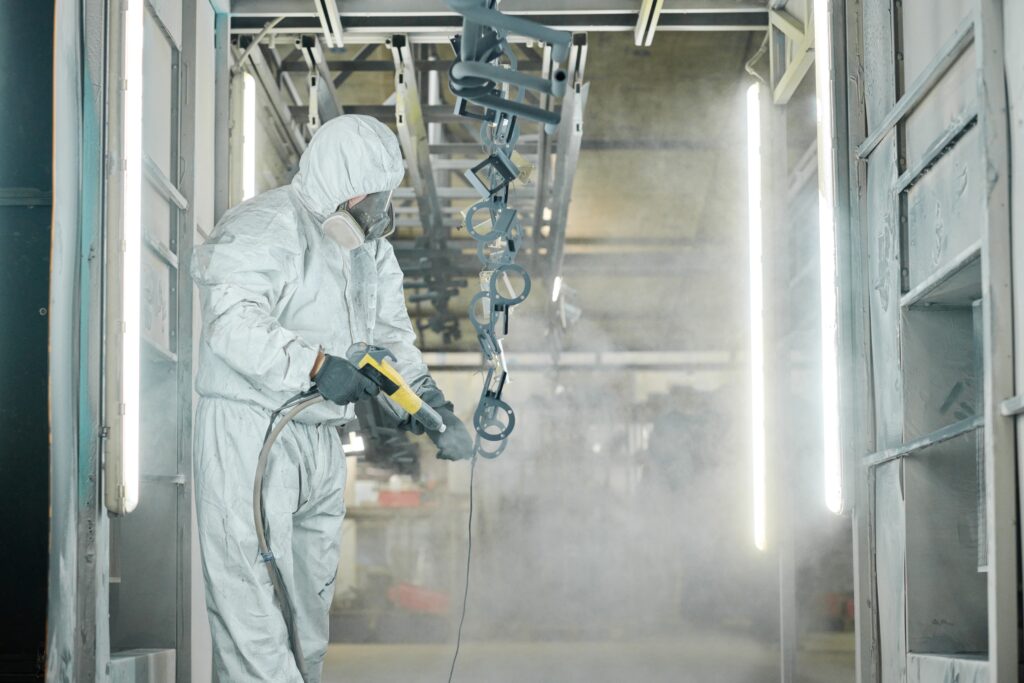
The difference between powder coating and paint for metal finishing lies in application and performance. Powder coating uses electrostatically applied dry powder cured into a durable finish, while liquid paint is sprayed and air- or heat-dried. Powder coating generally offers greater durability and corrosion resistance, while paint provides flexibility and lower upfront cost.
Key Differences: Powder Coating vs Paint
- Powder coating forms a thicker, more uniform finish
- Paint offers easier touch-up and lower initial cost
- Powder coating durability is higher under wear and impact
- Paint allows for more flexibility in color matching and application
- Powder coating reduces solvent use and emissions
Understanding these differences is critical when selecting metal finishing options for OEM components.
Overview of Common Metal Finishing Options
OEM engineers and sourcing teams evaluate several industrial coating methods depending on application requirements.
Powder Coating
Powder coating is widely used for finishing OEM components that require durability and corrosion resistance coatings.
- Electrostatic application
- Heat-cured finish
- Thick, uniform coating
- High resistance to wear and chemicals
Liquid Paint
Liquid paint remains a common choice among metal finishing options due to its flexibility.
- Spray-applied coating
- Air-dried or baked
- Easier to apply on complex geometries
- Lower upfront cost
Plating
Plating applies a thin metallic layer to improve corrosion resistance and conductivity.
- Electroplating or electroless processes
- Thin coatings
- Used for functional or decorative purposes
Anodizing
Primarily used for aluminum, anodizing enhances surface hardness and corrosion resistance.
- Electrochemical process
- Integrated into the material surface
- Limited to certain metals
Each of these industrial coating methods serves a specific purpose depending on performance, environment, and cost requirements.
Durability Comparison: Powder Coating vs Paint and Other Methods
Durability is a key factor when evaluating powder coating vs paint for OEM applications.
Powder Coating Durability
- Strong resistance to impact and abrasion
- Superior corrosion resistance coatings
- Long-lasting finish with minimal degradation
Painted vs Coated Metal Performance
- Paint is more prone to chipping and wear
- Lower resistance to harsh environments
- Requires more frequent maintenance
Comparison to Other Finishing Methods
- Plating offers corrosion resistance but limited thickness
- Anodizing provides surface hardness but is material-specific
For applications requiring long-term performance, powder coating durability often provides a more reliable solution than traditional paint.
Cost and Lifecycle Considerations
When evaluating powder coating vs paint, cost must be considered across the full product lifecycle, not just initial application.
Upfront Cost
- Paint typically has lower initial cost
- Powder coating may require higher setup investment
Lifecycle Cost
- Powder coating reduces maintenance and replacement costs
- Paint may require touch-ups or reapplication over time
Operational Impact
- Powder coating reduces downtime due to fewer failures
- Improved durability lowers long-term cost of ownership
For OEM teams, selecting the right finishing for OEM components requires balancing upfront cost with long-term performance.
Best Applications for Each Finishing Method
Different industrial coating methods are suited for specific environments and performance requirements.
Powder Coating Applications
- Structural components exposed to wear
- Outdoor or corrosive environments
- High-volume OEM components requiring durability
Paint Applications
- Components requiring frequent color changes
- Low-impact environments
- Applications where flexibility is needed
Plating Applications
- Electrical components
- Corrosion protection for small parts
- Decorative finishes
Anodizing Applications
- Aluminum components
- Lightweight structural parts
- Applications requiring surface hardness
Selecting the right metal finishing options ensures that components meet both performance and cost expectations.
Comparison Table: Metal Finishing Options
| Method | Durability | Cost | Best Use Case |
|---|---|---|---|
| Powder Coating | High | Moderate | Structural, high-wear components |
| Paint | Moderate to Low | Low | Aesthetic or low-impact applications |
| Plating | Moderate | Moderate | Corrosion protection, electrical parts |
| Anodizing | High (specific use) | Moderate | Aluminum components |
This comparison helps sourcing teams evaluate powder coating vs paint alongside other industrial coating methods.
Selecting the Right Finish for OEM Components
Choosing between powder coating vs paint depends on several factors:
- Environmental exposure
- Performance requirements
- Cost constraints
- Production volume
OEM teams should consider both technical requirements and lifecycle cost when selecting finishing for OEM components.
For projects requiring durability and consistency, powder coating often provides a strong balance of performance and cost efficiency.
Supporting Finishing Decisions with Mills Products
Mills Products supports OEM customers by helping evaluate metal finishing options based on application requirements.
Capabilities include:
- Coordination of powder coating and finishing processes
- Integration with fabrication and forming operations
- Support for high-volume OEM component production
This approach ensures that finishing decisions align with both performance and cost objectives.
For teams evaluating powder coating vs paint, early collaboration helps optimize both durability and manufacturing efficiency.
FAQ: Powder Coating vs Paint
What is the main difference between powder coating and paint?
Powder coating is a heat-cured dry finish with higher durability, while paint is a liquid coating with lower upfront cost and easier application.
Is powder coating more durable than paint?
Yes. Powder coating durability is generally higher, offering better resistance to impact, wear, and corrosion.
When should paint be used instead of powder coating?
Paint is suitable for low-impact environments or when flexibility in application and color matching is required.
What are the best metal finishing options for corrosion resistance?
Powder coating, plating, and anodizing are commonly used corrosion resistance coatings depending on material and environment.
How do I choose the right finish for OEM components?
Evaluate environmental conditions, performance requirements, and lifecycle cost to determine the best finishing method.
Conclusion
Comparing powder coating vs paint is essential for selecting the right finishing method for OEM applications. While paint offers flexibility and lower upfront cost, powder coating durability provides long-term performance and reduced lifecycle cost.
To determine the best metal finishing options for your application, contact Mills Products to review your requirements and identify the most effective solution.