

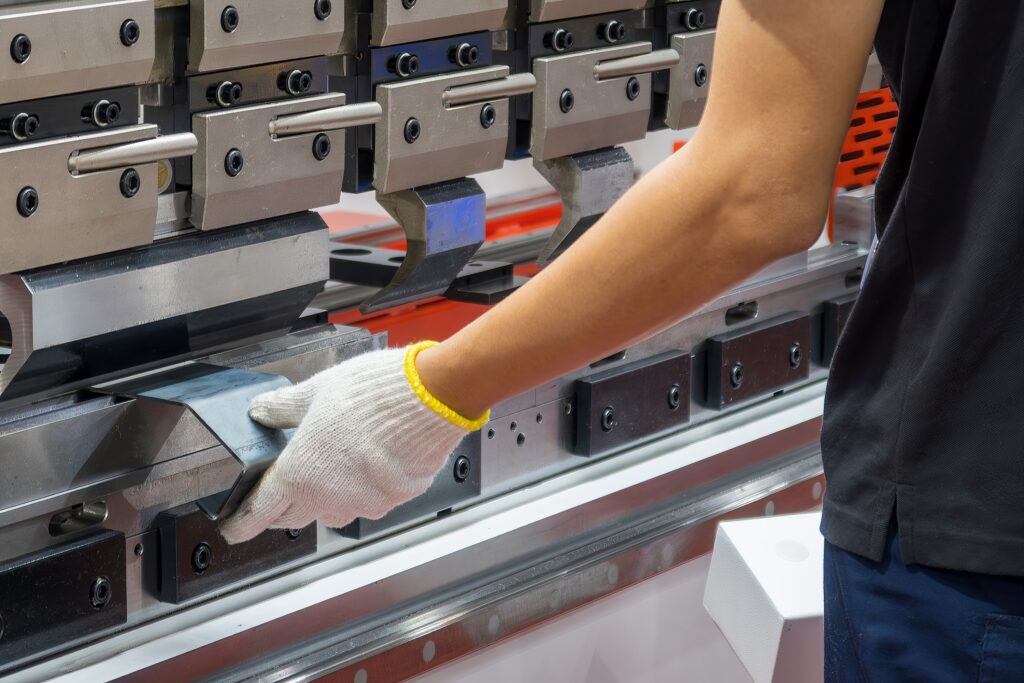
Tolerance in metal forming refers to the allowable variation in a part’s dimensions during the forming process. Maintaining tight tolerance in metal forming ensures that high precision metal components meet exact specifications, enabling consistent performance, proper fit, and reliable assembly across high-volume OEM production.
Why Tolerance Control in Metal Forming Matters
- Ensures consistent part-to-part accuracy
- Supports reliable assembly and fitment
- Reduces rework, scrap, and production delays
- Maintains performance in critical applications
- Improves overall product quality and lifecycle
Tolerance control manufacturing is a foundational requirement for producing OEM component accuracy at scale.
What Tolerance Means in Metal Forming
Tolerance in metal forming defines the acceptable range of variation for dimensions such as thickness, length, angle, and profile geometry.
In precision forming, tolerances are established based on:
- Functional requirements of the part
- Assembly constraints
- Material behavior during forming
- Manufacturing process capabilities
Tight metal forming tolerances ensure that each part conforms to design specifications, even across large production runs.
How Tolerance Affects Fit, Function, and Performance
Tolerance directly impacts how components interact within assemblies. Small deviations can create significant downstream issues.
Fit and Assembly
- Misalignment between mating parts
- Increased assembly time due to adjustments
- Difficulty achieving consistent fastening or alignment
Functional Performance
- Reduced structural integrity
- Increased wear due to improper contact
- Performance inconsistencies across products
Product Reliability
- Higher failure rates in the field
- Increased warranty claims
- Reduced customer satisfaction
Maintaining tolerance in metal forming is critical for ensuring that high precision metal components perform as intended.
Common Issues Caused by Poor Tolerance Control
When tolerance control manufacturing is not properly managed, variation increases and impacts both production and performance.
Typical Problems Include
- Dimensional drift across production batches
- Warping or distortion during forming
- Inconsistent hole placement or geometry
- Poor surface quality affecting assembly
These issues lead to:
- Increased scrap and rework
- Delays in production timelines
- Higher total manufacturing costs
For sourcing teams, inconsistent tolerance increases supplier risk. For engineers, it compromises design integrity.
How Tolerance Is Controlled in Metal Forming
Achieving tight metal forming tolerances requires a combination of process control, tooling precision, and material consistency.
Step-by-Step Tolerance Control Process
- Design and Engineering Review
Evaluate part geometry and tolerance requirements based on application needs. - Tooling Development
Precision dies and roll tooling are designed to meet dimensional specifications. - Material Selection and Validation
Consistent material properties are critical for predictable forming behavior. - Process Setup and Calibration
Equipment is configured to maintain stable forming conditions. - In-Process Monitoring
Measurements and controls ensure tolerance adherence during production. - Final Inspection and Verification
Parts are validated against specifications to confirm OEM component accuracy.
This structured approach ensures that precision forming processes deliver consistent results across high-volume production.
Maintaining Tolerance in High-Volume Production
Maintaining tolerance in metal forming becomes more complex as production volume increases. Variation can accumulate if processes are not tightly controlled.
Key Factors for Scalable Precision
- Stable and repeatable forming processes
- Regular tooling maintenance and inspection
- Controlled environmental and machine conditions
- Continuous quality monitoring
These factors ensure that metal forming tolerances remain consistent from initial runs through full production.
The Role of Precision Forming in OEM Applications
Precision forming is essential for industries that rely on high precision metal components.
Applications Requiring Tight Tolerance Control
- Appliance components requiring consistent fit
- Automotive structural and support parts
- Industrial equipment with performance requirements
- Infrastructure systems with tight assembly constraints
In each case, tolerance control manufacturing ensures that components integrate seamlessly into larger systems.
Supporting OEM Component Accuracy with Mills Products
Mills Products delivers precision forming solutions designed to meet tight tolerance requirements in OEM manufacturing.
Capabilities include:
- Roll forming for consistent profile geometry
- Precision metal stamping for high-volume production
- Process control systems that ensure repeatability
By maintaining strict tolerance control manufacturing standards, Mills Products supports the production of high precision metal components that meet demanding specifications.
For teams evaluating suppliers based on quality and repeatability, this approach reduces risk and improves production outcomes.
Cost Implications of Poor Tolerance Control
Tolerance issues do not just affect quality—they directly impact cost.
Cost Drivers Linked to Poor Tolerance
- Increased scrap and material waste
- Higher labor costs for rework
- Production delays and downtime
- Additional inspection and quality control
Maintaining tight tolerance in metal forming reduces these costs and improves overall efficiency.
FAQ: Tolerance in Metal Forming
What is tolerance in metal forming?
Tolerance in metal forming is the allowable variation in part dimensions that ensures components meet design and functional requirements.
Why is tolerance control important in OEM manufacturing?
It ensures consistent part accuracy, reduces defects, and supports reliable assembly and performance.
How are metal forming tolerances controlled?
Through precision tooling, stable processes, material consistency, and continuous quality monitoring.
What happens if tolerances are too loose?
Loose tolerances can lead to assembly issues, performance failures, and increased production costs.
Can tight tolerances be maintained in high-volume production?
Yes. With proper process control and tooling, precision forming can maintain tight tolerances across large production runs.
Conclusion
Tolerance in metal forming is a critical factor in ensuring product quality, performance, and cost control in OEM manufacturing. Tight tolerance control manufacturing enables consistent production of high precision metal components, reducing risk and improving efficiency across the supply chain.
To evaluate tolerance requirements for your next project, submit your designs or specifications for review with Mills Products.