

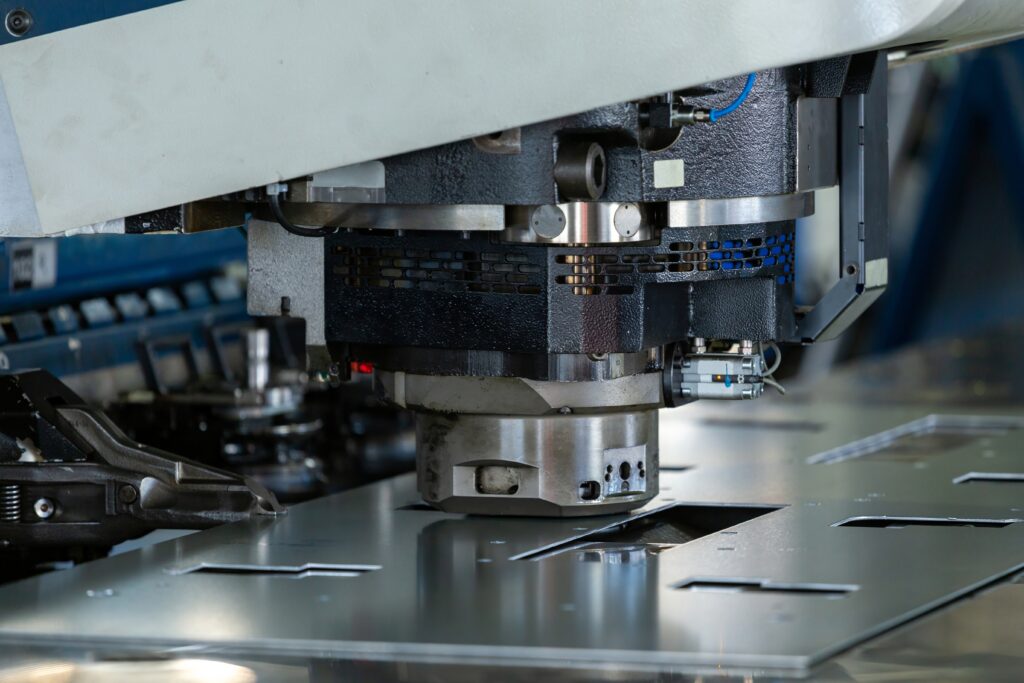
Precision metal stamping is a manufacturing process that produces stamped metal parts with tight tolerances and high repeatability. By controlling tooling, material flow, and press conditions, the service ensures consistent part geometry across high-volume production, reducing variation and improving assembly performance in OEM applications.
Key Benefits of Metal Stamping Precision
- Consistent part-to-part repeatability across large production runs
- Tight tolerance control for critical dimensions
- Reduced variation between batches
- Lower defect rates and scrap
- Improved assembly fit and function
- Scalable production for high-volume OEM metal components
Why Repeatability Matters in OEM Manufacturing
In OEM production, repeatability is not optional. Small variations in stamped metal parts can compound across assemblies, leading to performance issues, rework, or failure in the field.
Engineers and quality managers often encounter:
- Dimensional drift across production runs
- Misalignment during assembly
- Increased inspection and sorting requirements
- Higher scrap rates due to inconsistency
Metal stamping precision directly addresses these challenges by delivering consistent geometry across every part produced. For sourcing teams, this reduces supplier risk. For engineers, it ensures designs perform as intended.
How Metal Stamping Precision Controls Tolerances
Tolerance control is central to high tolerance stamping. Precision stamping relies on tightly controlled tooling and process parameters to maintain dimensional accuracy.
Key Factors That Influence Metal Stamping Precision
- Tooling Design and Maintenance
High-quality dies are engineered to exact specifications and maintained to prevent wear-related variation. - Press Stability
Consistent press force and alignment ensure repeatable forming conditions. - Material Consistency
Uniform material properties reduce variability during forming. - Process Control
Monitoring stroke, speed, and feed ensures each stamped metal part meets specification.
High tolerance stamping allows manufacturers to hold tight dimensional requirements across thousands or millions of parts, minimizing deviation and ensuring consistent output.
How Consistency Impacts Downstream Assembly
Inconsistent stamped metal parts create immediate challenges in downstream operations. Even minor deviations can disrupt assembly processes.
Common Issues from Inconsistent Parts
- Poor fit between mating components
- Increased assembly time due to adjustments
- Higher rejection rates during quality checks
- Additional labor for rework or sorting
When metal stamping precision is achieved, assemblies benefit from:
- Predictable fit and alignment
- Faster assembly cycles
- Reduced need for manual adjustments
- Improved overall product reliability
For OEM manufacturing, this translates to lower operational costs and improved production efficiency.
How High Tolerance Stamping Reduces Defects and Rework
High tolerance stamping minimizes defects by ensuring each stamped metal part meets defined specifications. This reduces variability at the source rather than relying on inspection to catch issues later.
Defect Reduction Through Precision
- Dimensional Accuracy
Parts consistently meet tolerance requirements. - Surface Quality Control
Reduced risk of deformation or defects during forming. - Process Repeatability
Stable production conditions limit variation between parts.
Reducing defects at the stamping stage eliminates the need for downstream corrections. This leads to:
- Lower scrap rates
- Reduced rework costs
- Improved throughput
For sourcing teams, this means fewer disruptions. For quality managers, it means more predictable outcomes.
What Is Precision Metal Stamping and How It Works
This kind of stamping precision is achieved through a controlled process that shapes metal using dies and presses to produce consistent, high-quality components.
Step-by-Step Stamping Process
- Material Preparation
Metal sheets or coils are selected based on application requirements. - Tooling Setup
Precision dies are installed and aligned within the press. - Stamping Operation
The press applies force to shape the metal into the desired geometry. - Part Ejection
Formed stamped metal parts are removed from the die. - Inspection and Quality Control
Parts are measured to ensure compliance with tolerance specifications.
This process enables high tolerance stamping across high-volume production, ensuring each component meets design requirements.
Maintaining Metal Stamping Precision at Scale
Achieving this stamping precision at low volume is one challenge. Maintaining it across high-volume production requires robust systems and process control.
Critical Elements for Scalable Precision
- Consistent tooling maintenance schedules
- Real-time process monitoring
- Controlled material sourcing
- Experienced engineering oversight
These factors ensure that stamped metal parts remain consistent from the first run to the last.
When High Tolerance Stamping Is Required
High tolerance stamping is essential when:
- Components must fit precisely within assemblies
- Products require consistent performance under load
- Production volumes are high and variation risk increases
- Quality standards are strict and non-negotiable
In these scenarios, metal stamping precision directly impacts product performance and manufacturing efficiency.
Supporting Consistency in OEM Metal Components
Mills Products provides precision metal stamping and roll forming capabilities designed to support high-volume OEM production. With a focus on tight tolerance stamping and repeatability, Mills Products delivers stamped metal parts that meet strict engineering and quality requirements.
This approach supports:
- Consistent part geometry
- Reduced variation across production runs
- Reliable performance in downstream assembly
For engineers and sourcing teams, this provides a dependable foundation for scalable manufacturing.
FAQ: Metal Stamping Precision
What is metal stamping precision?
Metal stamping precision refers to the ability to produce stamped metal parts with tight tolerances and consistent dimensions across production runs.
Why is repeatability important in stamping?
Repeatability ensures that each part matches design specifications, reducing variation and preventing assembly issues.
How does high tolerance stamping reduce defects?
By controlling tooling and process conditions, high tolerance stamping minimizes variation, reducing the likelihood of defects and rework.
What industries benefit from precision stamping?
Industries such as automotive, appliances, and industrial manufacturing rely on metal stamping precision for consistent OEM metal components.
Can precision stamping support high-volume production?
Yes. Stamping precision for metals is specifically suited for high-volume manufacturing, delivering consistent output at scale.
Conclusion
Metal stamping precision plays a critical role in ensuring consistency, reducing defects, and supporting efficient OEM manufacturing. By maintaining tight tolerances and repeatability, high tolerance stamping enables reliable production of stamped metal parts across large volumes.
To evaluate how precision metal stamping can improve consistency in your next program, submit your specifications or drawings for review with Mills Products.